Monday, March 7, 2011

New Idlers?

The Aids Life Cycle is pretty much an endurance ride - to me anyway. My max so far is 57 miles/day. The ride maxes out at over 100miles/day. I have a lot to prepare for. I've heard of idler's breaking down which worries me a bit. The best maintenance is preventive maintenance? Sounds like something a salesperson would say. I can't help but to think there some truth to it. If the "rule" applies to cars, it probably does to trikes too.

My buddy at BROL lead me to the Rebike. They make an SL-II line that works with the KMX. $65 a pop though. Ouch. That's $65 x 3 idlers = $195. That's 28% of the cost of the entire trike!


I'll probably end up buying the stock ones as backup at $20/each. That's like a 3 for 1 deal.

After some further investigation, I came across a review from my fellow friends at Recumbent Journal. In short, the Rebike SL-68 idler is more noisy than both the Terratrike and stock versions. Idlers with teeth tend to be quieter b/c they widen the diameter of the idler and therefore deflect the chain at a shallower angle. As for whether or not this applies to the SL-II version, I have no clue. The review was done a year ago. Perhaps Rebike has made changes since? Highly doubtful, but I'd like to think there's a possibility.

Gears revamped

I had been researching options for upgrading my gearing to be better prepared for the Aids Life Cycle and found someone though the forums willing to help. That's when I found Andrew, a fellow member. He came through with the gearing components!

I turned the trip to Monterey/Salinas where he lives into a vacation with my wife. Andy sounded nice over the phone but was even more fun in person. He hooked me up with the following components this afternoon:

- 2 16" Catrike front wheels
- wrapped with Schwalbe tires
- Rear SRAM 3x7 hub
- mounted on a 20" rear wheel
- Internal gear hub shifter
- Front derailleur mount
- 2 twist shifters

That was the agreed list but he threw in a couple other components:
- 8-speed cassette
- Rear SRAM LX derailleur

After Andrew shared with me his overwhelming collection of 7 bent trikes all stored in his garage and 2 bent bikes from his home office, we still had energy to work on my trike. We started with the crankset swapping a single speed one for a 3 chain ring setup. It came off his old KMX X-Class.


Next we went on to installing the new 9-speed cassette onto the hub. When I say "we," I mean "he." Andrew helped a ton with all this. I'm very grateful for his help. Couldn't have one it easily w/o him. He taught me a few things today.


I was able to help with the next part and that was feeding the chain back through after Andy shortened it for me. We're still not sure why there's so much slack we pulled off at least 12 links! Maybe it was too long to begin with.


I learned an important lesson about derailleurs. Any explained exactly how to make the proper adjustments to it. It wasn't rocket science, but I'm glad I had someone to teach me in person.

Without the chain on the derailleur, the chain should be 1 or 2 links longer than snug while on the largest two cogs. I'm guessing it's a 28T rear and a 42T front. Once reattached to the derailleur, the chain should be the perfect length. Thanks for the tip!

He found that the current SRAM 3.0 derailleur was loose and was nice enough to give me a replacement. Unfortunately it isn't compatible with my current twist shifters. So what did he do? He gave me new shifters! We couldn't install them yet b/c we needed longer cables.

Since the trike doesn't fit in the car for the ride back to the hotel, we had to pull the wheel off again to squeeze it in. It has a few more components that keep it secure to the frame and here they are in order. It holds the axle to the dropouts.

It's never good to get too much of a good thing all at once which is why I'm so excited that my upgrade will come in phases:

PHASE 1: (completed today)
- An 8-sp cassette replaces my 7-sp freewheel.

- I loose my granny 34T cog, but the 22T front chainring makes up for it.

- The single 40T chain ring was replaced with a mountain 3. My lowest chain ring for hill climbing is 22T while the largest 42T will be used for downhill racing. One drawback of this is the new crankarms are 170mm. I like my current 155's. Spinning won't be as comfortable but at least I'll have more leverage.

- Unfortunately Phase 1 comes at the expense of my rear brake. No more rear brake - at all. This means no more drifting into turns. It'll be a lot less fun, but at least I can climb hills and speed down them much more easily. Most trikes don't come with rear brakes to begin with, so this bonus that KMX offered on their Tornado lineup isn't too big of a loss. The rear brake is what the KMX line was known for, so I'm a bit sad to see it go. The extra components more than make up for it though. It's worth it.

- The rear mag wheel is replaced by the standard spoked wheel. The spoked one is so much better built. I'm having a lot more confidence in this one in reliability and safety than the BMX mag.

PHASE 2:
- Making the rear 3x7 hub work. Technically it's a 3x8 since we swapped the 7-sp cassette for the 8-sp one. The internal gear hub doesn't currently work b/c the cable needed for the switch to engage it is not long enough. Once I get a new cable and install it, the trike's gear range will be tripled. Yup, my current 3x8= 24-sp trike will become a 72-sp. That's crazy. I'll get more high end gears and low end gears. I don't care much for the middle. Who needs 72 gears?? 21 would be plenty, but the current setup doesn't give me the range I need to successfully complete the Aids Life Cycle ride safely and comfortably.

PHASE 3:
- Lighten up the front end. I need to buy new bearings to make the Catrike 16" spoked wheels fit on the KMX. Until then, I'll have to continue using the heavy plastic wheels. I should do a quick weigh-in to compare the difference in weight btw the two types of wheels. I'll report later.


Sunday, March 6, 2011

Camping gear test trial

I'm sleeping on the hardwood living room floor with the new sleeping pad and bag to see how I and the equipment will hold up. More updates tomorrow.

....

I think I woke up 4 times through the night tossing and turning. I'm definitely not used to sleeping on such a hard surface. The inflatable pad helped a lot, but I was a disappointed that it leaks! It's definitely not as full of air after sleeping on it than when it was first inflated.

The sleeping bag was pretty comfortable! I started sweating in the middle of the night and had to zip the side down a bit. No complaints.

Total Packing List

There will be a ton of stuff I'll forget to bring on the ALC ride if I don't write it down. Here's the start of the ongoing list:

CAMPING RELATED:
- mirror (use Angela's)
- shaver
- get a haircut before the ride b/c there won't be hair dryers available
- glasses
- backup contact lenses
- regular non-cycling gloves (buy at dollar store)
- SD cards (buy)
- cycling sunglasses (replacement Tifosi Tyrant Fototec)
- sweat band (head/wrist)
- journal/pen
- APC Backup battery (Thank you Mark Jaremko)
- PSP USB charger cable (buy)
- hand warmers for sleeping

TRIKE RELATED:
- Backup spokes and nips for each wheel (4). No one will have spares the correct size.
- Backup cassette
- Extra tubes
- Extra tire, one of each size.

OTHER:
- netbook
- Internet capability card

UPDATE: 5/4/11
I found a list from a helpful website on what to bring. Tips included!

Friday, March 4, 2011

Down time packing list?

Angela and I aren't used to being away from a TV or computer so we'll have to figure out something to do with our downtime other than read. What should we bring?

1. Deck of cards
2. Sony PSP
3.

Anything else? Email me any recommendations you have.

More gear - self inflating mattress

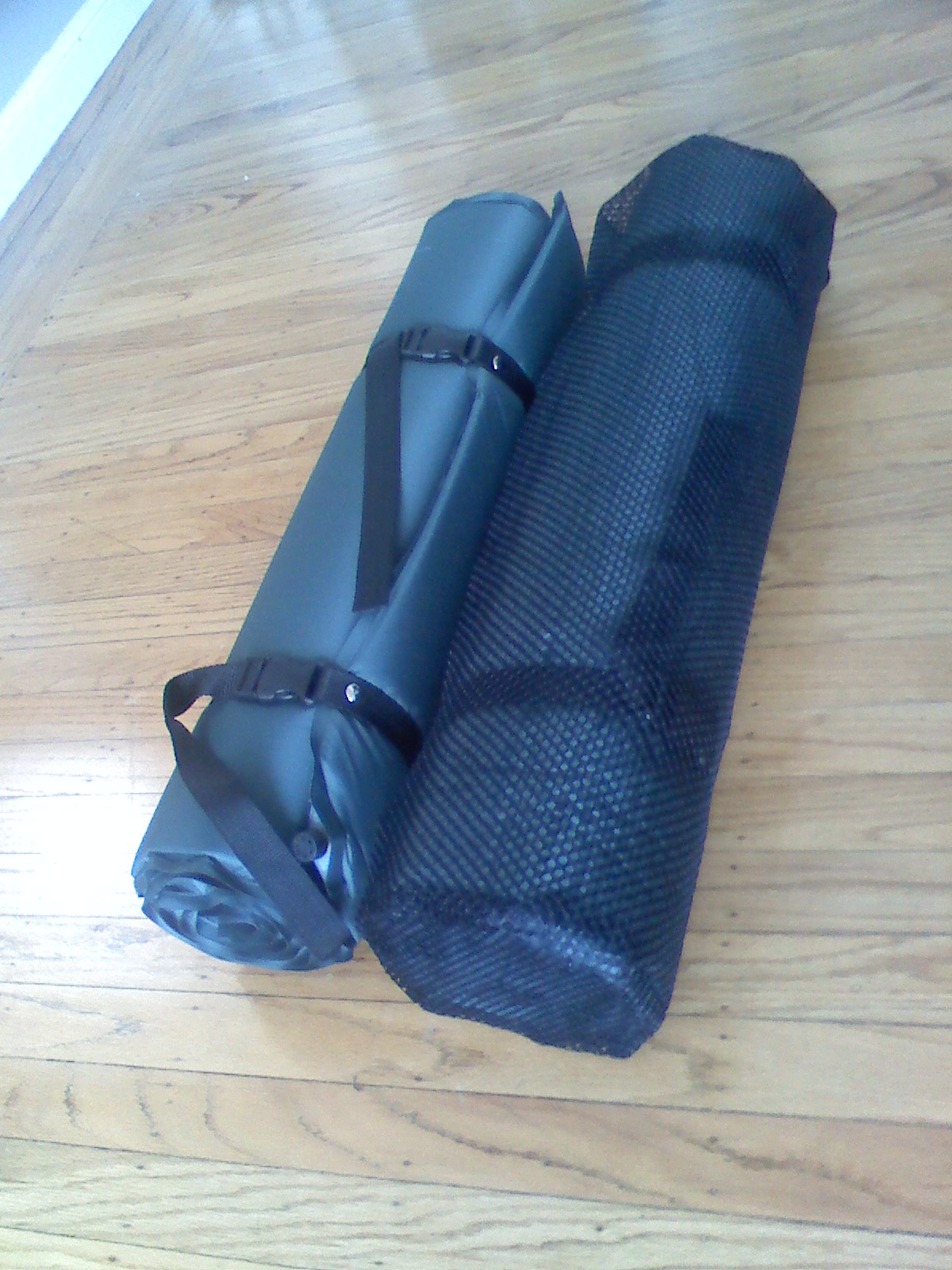
It's on the recommended to-bring list from ALC, so we're packing it. The normally $49.99 one was on sale at Big 5 Sporting Goods for $35. We picked up two and took it home for a test. It seems better than the regular foam kind which would've been $17.99. The price is about double, but hopefully, it'll be double the comfort. I hate sleeping on the floor and this will help smooth out the rough terrain we're expecting with rocks and twigs underneath our sleeping surface. I'm glad Angela insisted on this self-inflating version over the foam one I originally had my eye on. After all, it will be 6 days of sleeping in the wilderness.

Hopefully this thing will last us long enough to pass down to our kids for their school field trips.

REVIEW:
This thing must leak b/c it's definitely not as soft and full of air as when it's first inflated. After sleeping on it for the first night, I opened the valve and a gush of air started going back in. It was decent for sleeping and hopefully it will feel more comfortable on soil in a real world camping environment.

I tried this on my hardwood living room floor for a night of sleeping and am still convinced that it's better than a regular foam pad. At $35, it's not too bad. The competitor's versions are $60. I am a bit curious though and may buy the more expensive one just to try it out and see if I'm missing out on anything.

More gear - sleeping bags

The last time I went camping for that long was in Elementary School. This is going to be practically brand new for me. Luckily the ALC ride is fully supported so we don't really need to bring meals and cooking utensils. Even the tents are provided and volunteers help to put them up!

We will need a couple sleeping bags. The ALC ride limits each person to a single duffel bag weighing no more than 70 lbs. This is quite a bit of weight for regular traveling, but I need to also keep my trike gear in there as well.

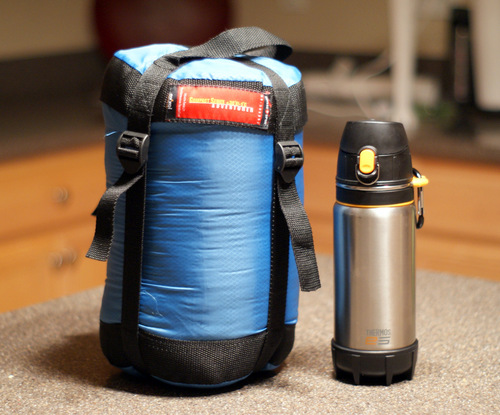
A good way to shed some weight is with a compact ultra light-weight sleeping bag. I looked at my favorite online retailer, Amazon and found the Suisee Sport Adult Adventurer Mummy Ultra-Compactable Sleeping Bag.


That's a mouthful eh? These things are tiny. I really don't think it gets much smaller than this. With the color aside, I only have four requirements:

1. Needs to meet the temperature requirements. This one is good for down to 30 degrees F. That should be fine for the June summer nights. Although I don't expect temperatures to go down that low, I was recommended by buying guides that the rating should be 10 degrees lower than what I'll anticipate I'd need.

2. Compact and light. The smaller the sleeping bag, the more room I'll have for my other gear.

3. Mummy style that covers the head. This will be the warmest type. The shape tapers down towards the feet for a snug warm fit. Yes, I read all 115 reviews on Amazon. I'm a bit crazy when it comes to research.

4. Price. As far as sleeping bag prices go, I saw that they ranged from $20-80. At $37/each shipped for this one, it didn't take me long to order a couple. The Alpine one with the same features which I was considering from Sports Authority was $25 + $2.38 tax = $27.38. But the temperature rating wasn't as good as the Suisee's. The $10 difference is worth our 6 nights of improved comfort.

REVIEW:
I'll respond to comments made on Amazon regarding this sleeping bag. Yes, the end strap on the compression cap is weak. It's a cheap material not up to par with even the most basic of school backpacks. Made in China? Probably - at least the straps were.

Is this thing really as compact as the picture above shows? Definitely. One would think that when removed from the manufacturer's packaging that it would be difficult to get it back down to that size once using it - not the case. It's fairly easy. Rather than folding the sleeping bag to nicely slip it back into it's case, it's much easier to just stuff it by the handful. This technique was supposedly recommended by the manufacturer when one of the Amazon buyers called them about it. It works, just stuff it by hand w/o bothering to fold it and it will easily fit back into it's original size.

I was surprised to find that the inside of the sleeping bag has a built-in zippered pocket perfect for valuables. I can see this will come in handy.

Size? Yes, this sleeping bag is much more narrow then other sleeping bags I've seen. Being a lanky 145lb lad in a 5'-8" frame, I fit just fine and have space to move. I can't say for certain this would be true for someone over 200lb's with an average body type.

Like most sleeping bags, it has a zipper on the inside so you can close it up while using it. The top also has a Velcro closer. The head wrap part of this mummy style sleeping bag has a nylon draw string that can keep the bag snug against the body. Since I was indoors in normal a normal room temperature environment, I didn't use it. I can imagine it would come in handy in colder conditions.

The compression sack works very well. The four straps securing the bag can be drawn quite easily keeping the bag tight and compact. All in all, I'm happy with the purchase and would highly recommend it to anyone. The price fits perfectly for even people who aren't necessarily looking to camp multiple days outdoors. The extra features of this bag compared to cheaper $20 bags is well worth the $17 difference.