Friday, March 4, 2011

Down time packing list?

Angela and I aren't used to being away from a TV or computer so we'll have to figure out something to do with our downtime other than read. What should we bring?

1. Deck of cards
2. Sony PSP
3.

Anything else? Email me any recommendations you have.

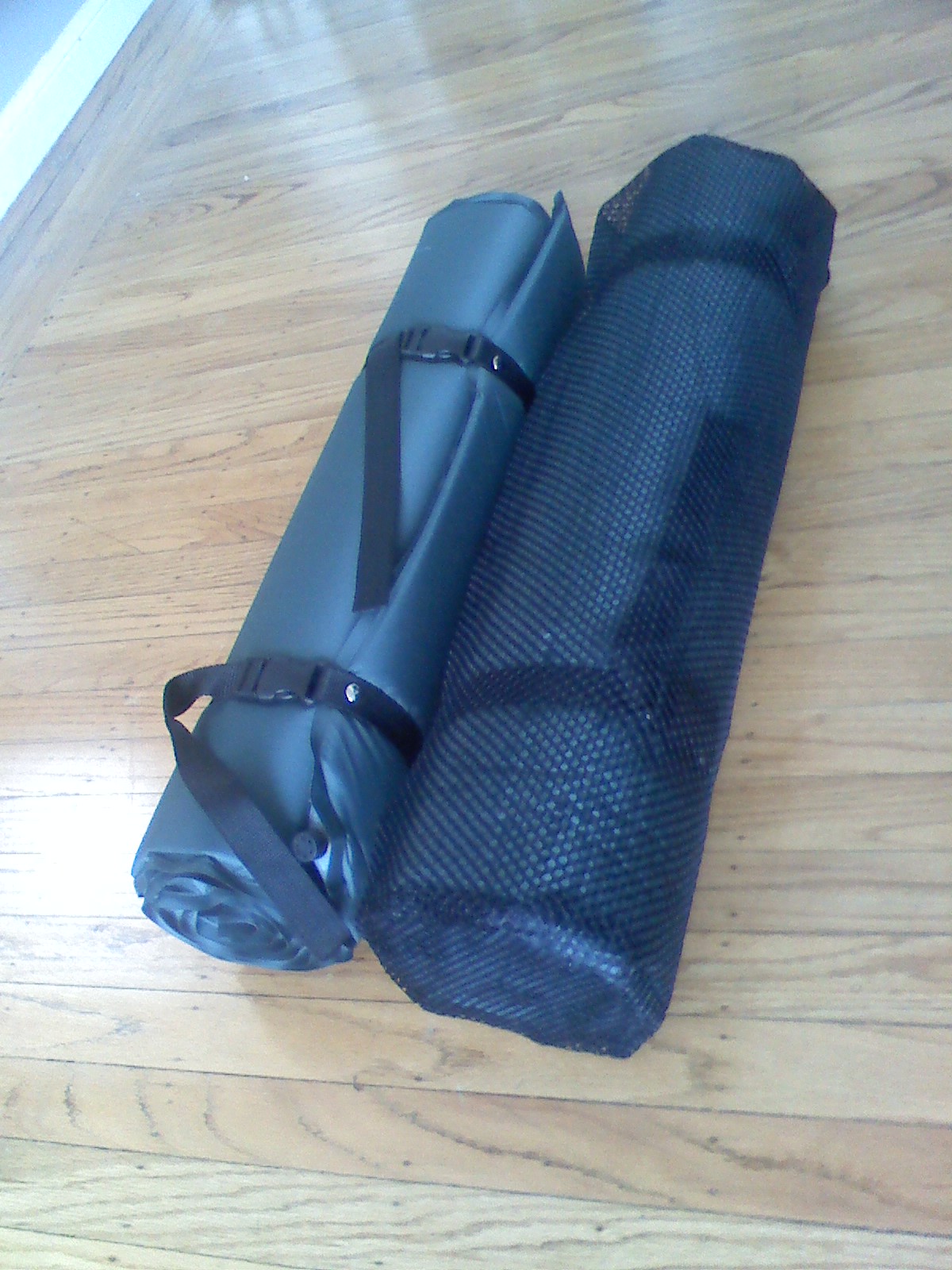
More gear - self inflating mattress

It's on the recommended to-bring list from ALC, so we're packing it. The normally $49.99 one was on sale at Big 5 Sporting Goods for $35. We picked up two and took it home for a test. It seems better than the regular foam kind which would've been $17.99. The price is about double, but hopefully, it'll be double the comfort. I hate sleeping on the floor and this will help smooth out the rough terrain we're expecting with rocks and twigs underneath our sleeping surface. I'm glad Angela insisted on this self-inflating version over the foam one I originally had my eye on. After all, it will be 6 days of sleeping in the wilderness.

Hopefully this thing will last us long enough to pass down to our kids for their school field trips.

REVIEW:
This thing must leak b/c it's definitely not as soft and full of air as when it's first inflated. After sleeping on it for the first night, I opened the valve and a gush of air started going back in. It was decent for sleeping and hopefully it will feel more comfortable on soil in a real world camping environment.

I tried this on my hardwood living room floor for a night of sleeping and am still convinced that it's better than a regular foam pad. At $35, it's not too bad. The competitor's versions are $60. I am a bit curious though and may buy the more expensive one just to try it out and see if I'm missing out on anything.

More gear - sleeping bags

The last time I went camping for that long was in Elementary School. This is going to be practically brand new for me. Luckily the ALC ride is fully supported so we don't really need to bring meals and cooking utensils. Even the tents are provided and volunteers help to put them up!

We will need a couple sleeping bags. The ALC ride limits each person to a single duffel bag weighing no more than 70 lbs. This is quite a bit of weight for regular traveling, but I need to also keep my trike gear in there as well.

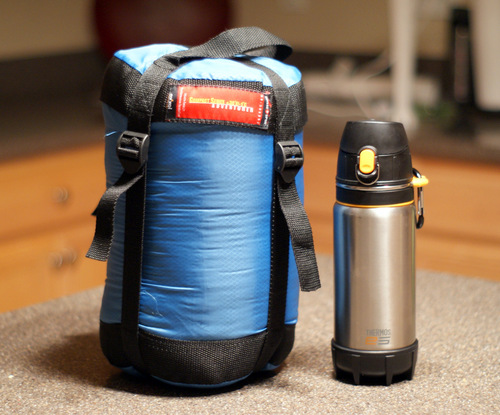
A good way to shed some weight is with a compact ultra light-weight sleeping bag. I looked at my favorite online retailer, Amazon and found the Suisee Sport Adult Adventurer Mummy Ultra-Compactable Sleeping Bag.


That's a mouthful eh? These things are tiny. I really don't think it gets much smaller than this. With the color aside, I only have four requirements:

1. Needs to meet the temperature requirements. This one is good for down to 30 degrees F. That should be fine for the June summer nights. Although I don't expect temperatures to go down that low, I was recommended by buying guides that the rating should be 10 degrees lower than what I'll anticipate I'd need.

2. Compact and light. The smaller the sleeping bag, the more room I'll have for my other gear.

3. Mummy style that covers the head. This will be the warmest type. The shape tapers down towards the feet for a snug warm fit. Yes, I read all 115 reviews on Amazon. I'm a bit crazy when it comes to research.

4. Price. As far as sleeping bag prices go, I saw that they ranged from $20-80. At $37/each shipped for this one, it didn't take me long to order a couple. The Alpine one with the same features which I was considering from Sports Authority was $25 + $2.38 tax = $27.38. But the temperature rating wasn't as good as the Suisee's. The $10 difference is worth our 6 nights of improved comfort.

REVIEW:
I'll respond to comments made on Amazon regarding this sleeping bag. Yes, the end strap on the compression cap is weak. It's a cheap material not up to par with even the most basic of school backpacks. Made in China? Probably - at least the straps were.

Is this thing really as compact as the picture above shows? Definitely. One would think that when removed from the manufacturer's packaging that it would be difficult to get it back down to that size once using it - not the case. It's fairly easy. Rather than folding the sleeping bag to nicely slip it back into it's case, it's much easier to just stuff it by the handful. This technique was supposedly recommended by the manufacturer when one of the Amazon buyers called them about it. It works, just stuff it by hand w/o bothering to fold it and it will easily fit back into it's original size.

I was surprised to find that the inside of the sleeping bag has a built-in zippered pocket perfect for valuables. I can see this will come in handy.

Size? Yes, this sleeping bag is much more narrow then other sleeping bags I've seen. Being a lanky 145lb lad in a 5'-8" frame, I fit just fine and have space to move. I can't say for certain this would be true for someone over 200lb's with an average body type.

Like most sleeping bags, it has a zipper on the inside so you can close it up while using it. The top also has a Velcro closer. The head wrap part of this mummy style sleeping bag has a nylon draw string that can keep the bag snug against the body. Since I was indoors in normal a normal room temperature environment, I didn't use it. I can imagine it would come in handy in colder conditions.

The compression sack works very well. The four straps securing the bag can be drawn quite easily keeping the bag tight and compact. All in all, I'm happy with the purchase and would highly recommend it to anyone. The price fits perfectly for even people who aren't necessarily looking to camp multiple days outdoors. The extra features of this bag compared to cheaper $20 bags is well worth the $17 difference.

I Used To Be Fat

The only time I was fat was probably 3 weeks after I was born. I've been lanky ever since, but I lately I've been watching a show called "I Used to be Fat" on MTV. It's an inspiring documentary about heavy folks going on a grueling 90 day transformation with a trainer. Work out sessions are everyday for 90 days. Yup that's 7-days/week for 90 days. Some of these kids have lost in excess of 130lb's! That's crazy. One guy lost 40% of his initial weight.

The struggle they've gone through in Season 1 of "I Used to be Fat" is similar to the mental struggle and physical training I have to endure for the Aids Life Cycle. Back to back 80miles/day for 7 days is pretty nuts.

This is what the route looks like. Yup, Northern California to South Calfifornia. It's not nearly as crazy as the guy running across the country, but it's still a crazy feat. I've been too involved in school to be the athletic type, but hopefully this can be a life changing physical accomplishment I can share with my kids.

Your daddy rode his tricycle from San Francisco to Los Angeles!

It'll also be a fun vacation time with Angela who will be my tent mate. She's officially registered as a volunteer nurse for the ride.

Frankinstein

The trike will be going through a makeover. The seller from the forum, Bentrideronline has gotten back to me and we've scheduled a date to have the components installed that will give me a better gear range - a much better gear range.

It will include the SRAM dual drive giving me extra gears in the rear to combine with the replacement 7-sp cassette. Not only that, but I'll also be getting the ability to have three chain rings up front for a combined 63 speeds! Wow, that's nuts.

The fun doesn't stop there. The black KMX mags will be replaced by traditional spoked wheels all around. The fronts are from a Catrike. Hopefully we can make this compatible.

The trike won't look nearly as cool, but I'm still up for it if it makes me more capable of completing the Aids Life Cycle. The ride is scaring me a bit as we get closer to the date.


Wednesday, March 2, 2011

Comparing Catrike Road, Expedition and Speed

There are quite a few differences between the Catrike Road, Expedition and Speed models. Let's take a look at it in detail.


WHEEL SIZE:
I don't like how the Road's three wheels are all the same size. It's odd to me that the rear drive wheel isn't larger. This is my preference purely on looks - same reason why I fell so much for the Speed. It has identical wheel sizes as my current KMX Tornado. The proportions look good and the smaller (20" as opposed to 26") rear drive wheel's ability to climb hills better is an attractive characteristic.

KMX - 20" rear, 16" front
Road - 20" rear, 20" front
Speed - 20" rear, 16" front
Expedition - 26" rear, 20" front


LENGTH:
The KMX is just under 6' long. I hadn't realized how short that was until I rode with a few people from the East Bay Recumbents Yahoo group. The KMX is a baby compared to their Ice Trikes.

KMX - 6'-0"
Road - 6'-2"
Speed - 6'-3"
Expedition - 6'-7"


WEIGHT:
From what I've heard, weight matters. I haven't ridden anything else extensively so I have no clue, but I trust there's a noticeable benefit in having a lighter trike. For reference, carbon fiber road bikes are 16lbs or so.

KMX - 43lbs (ouch!)
Road - 33lbs
Speed - 30lbs
Expedition - 35lbs


GROUND CLEARANCE:
I found that the KMX does not clear city curbs coming down onto the street. I've scratched up the bottom pretty good in my attempts. I need to remember that a new trike wouldn't have to just meet the needs for the ALC, but for everyday riding back in the City on regular roads both urban and offroad.

KMX - 3.00"
Road - 3.00"
Speed - 2.25"
Expedition - 4.24"
Villager - 5.50" (good enough to clear curbs)

Even with the highest clearance of the bunch, the Expedition still doesn't clear curbs (according to the BROL forum members. On a Speed, I wouldn't even attempt a curb jump. That could literally snap the frame. Being clipped in, it would be a major inconvenience to have to get off the trike just to go down a curb.

Looking at the list, the Catrike Road is my new favorite. With 16" front wheels, it'll be set.

Catrike in detail

I didn't notice until now that the gear inches for all the Catrikes fall into two categories - the 20" and 26". The cranksets are the same - 30T low and 52T high. Some have a middle 39T or 42T chain ring while others don't, but that doesn't change the min and max gear inch range. This means that if I mod the KMX to these specs or beyond, it'll be more than capable (aside from the major 25% weight difference).

The Catrike Villager / Trail / Road / Speed all share a 20" rear drive wheel and the GI chart looks like this.

The GI range is 17.3-87.1GI's.


The Expedition is the only one with a larger 26" rear drive wheel. Its chart looks like this.

The GI range is 22.5-113.3GI's.

With a low of 22.5GI's, it probably doesn't climb much better than my KMX Tornado.


The major differences amongst the Catrike lineup is the seat angle. Let's look at the lineup.

Trail - 45º
Road - 37º
Speed - 29º
Expedition - 37º

My KMX's seat angle is adjustable between 39º-45º. I'm at the second to last lowest setting which puts me at a comfortable 41º. I do remember when I was setting it up, that the lowest 39º was a bit too low. So the perfect match would actually in fact NOT be the Speed like I thought, but the Road or Expedition.

It looks like someone did the work for me. Here's the detailed comparison of the Catrike lineup